
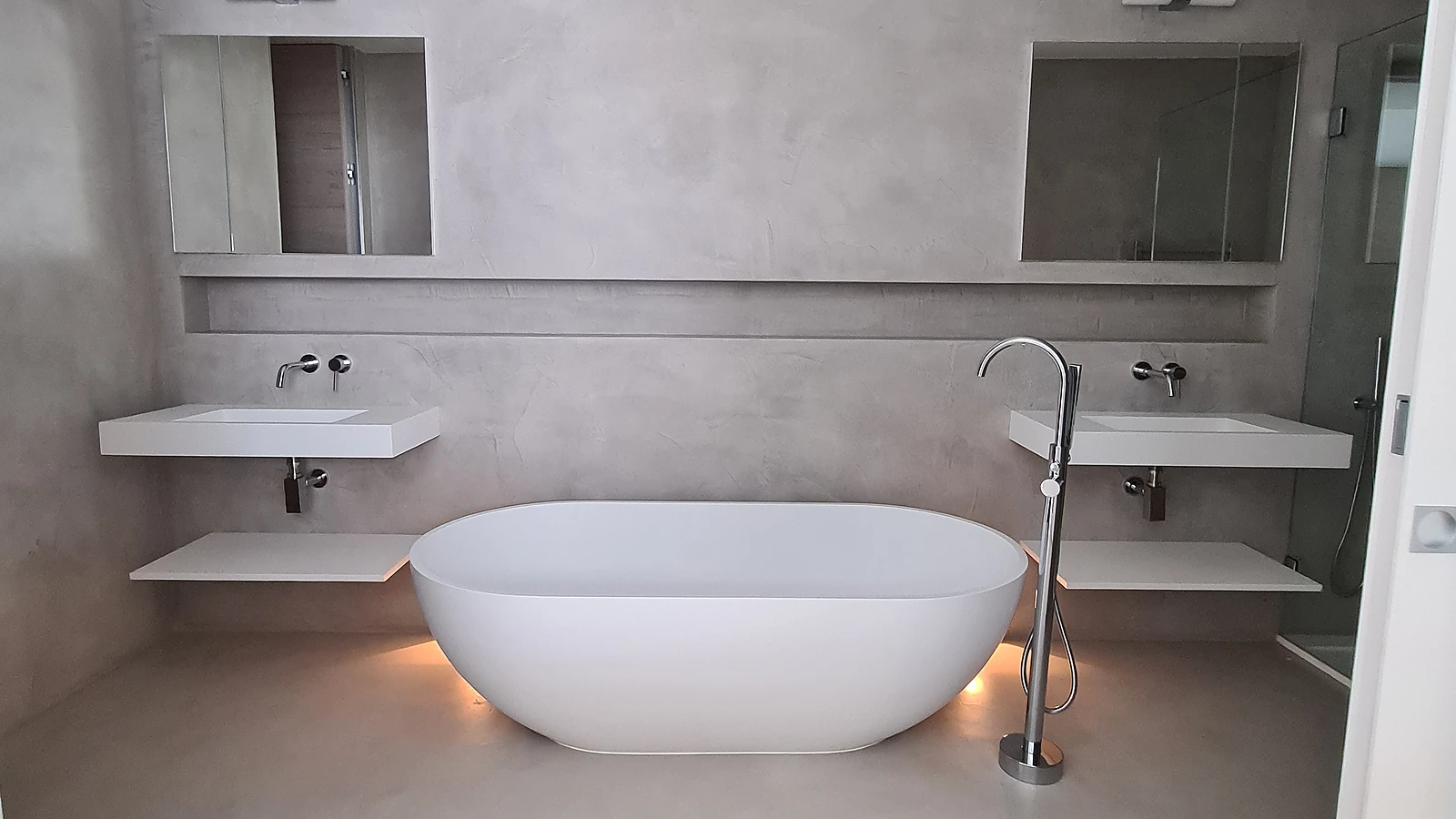
Highlighted the clear explanation of preparation and the overall process, and was very pleased with the finished quality.
Redha AltaieApplications
Where this finish makes sense.
Microcement is versatile, but it should still be specified around the space. The applications below are common examples rather than an assumption that every substrate is suitable.
- Open-plan residential floors
- Bathrooms and wet rooms
- Kitchen floors, walls and selected worktops
- Retail and showroom interiors
- Offices, receptions and hospitality spaces
- Feature walls and staircases
Specification before decoration
What we assess before installation.
A thin seamless finish depends on the condition below it. This is why substrate assessment and preparation are central to a reliable microcement installation.
Start with the substrate
Microcement is a thin finish, so the condition below it matters. Existing tiles, concrete or screed may be suitable when stable and properly prepared; movement, cracks, moisture and unevenness need to be addressed before the decorative coats are applied.
Choose performance before colour
Traffic, moisture, cleaning regime, underfloor heating and slip requirements influence the system and sealer. Colour and texture are selected after the performance requirements are understood.
Plan the complete scope
A useful proposal should account for the substrate, preparation, reinforcement, number of coats, finish, sealing system and project conditions rather than focusing on one headline figure.
Experience & accountability
Why Eco Microcement?
Eco Microcement is a family-run specialist based in Watford, with more than a decade of microcement installation experience across London and surrounding counties. Clients deal with a practical team that advises on the system the project needs rather than treating every enquiry as an opportunity to specify the most expensive option.
Eco Microcement serves Greater London and surrounding counties including Hertfordshire, Bedfordshire, Buckinghamshire, Oxfordshire and Essex.
Family-ownedPersonal communication and direct project accountability.
10+ yearsSpecialist installation experience across varied project types.
Real projectsClient-supplied completed-work photography used throughout the site.
Competitive valueProject-specific recommendations focused on quality, suitability and sensible specification.
Professional methodology
How the installation is built.
The visible finish is the final part of a controlled process. Exact materials and drying times vary by system and site conditions.
Consult & assess
Confirm area, substrate, access, expected use, finish direction and any moisture or movement concerns.
Prepare the substrate
Clean, repair and stabilise the base; remove contaminants and address unsuitable coatings or loose material.
Prime & reinforce
Use the preparation system appropriate to the substrate, including reinforcement where the specification requires it.
Apply base layers
Build the microcement in controlled thin coats, allowing the required drying and sanding between stages.
Create the finish
Apply finishing coats by hand to develop the selected colour, texture and natural trowel movement.
Seal & hand over
Apply the protective system suited to the space and provide cure, cleaning and aftercare guidance.
Service information: based on Eco Microcement's installation approach, published service information and completed-project experience. Final suitability, waterproofing, preparation and performance requirements are confirmed for the individual project.
More completed projects
A closer look at recent work.
A selection of completed home and interior microcement installations, shown here once at the end of the page.
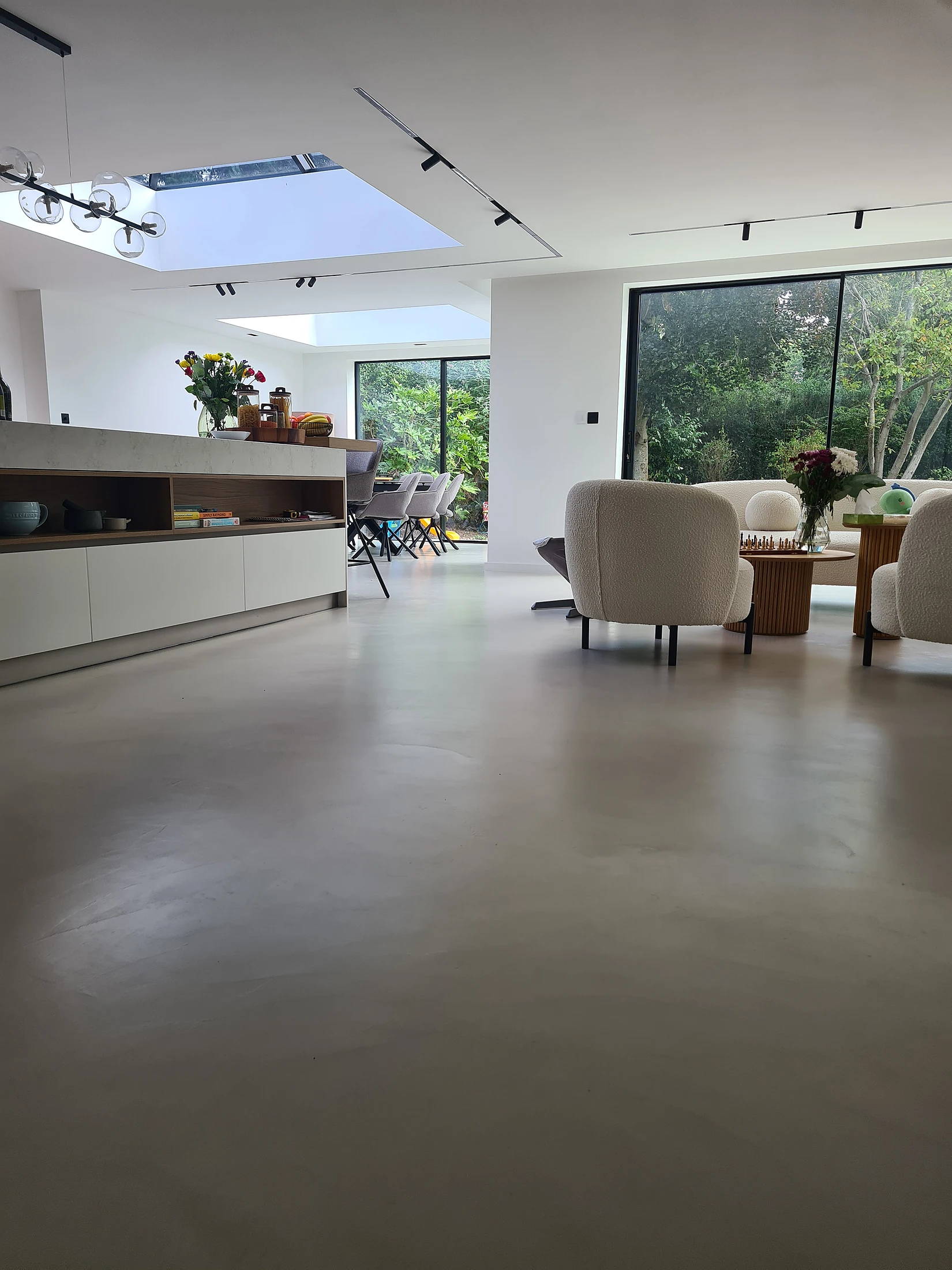
Open-plan microcement flooring
A continuous microcement floor through a bright kitchen and living space.
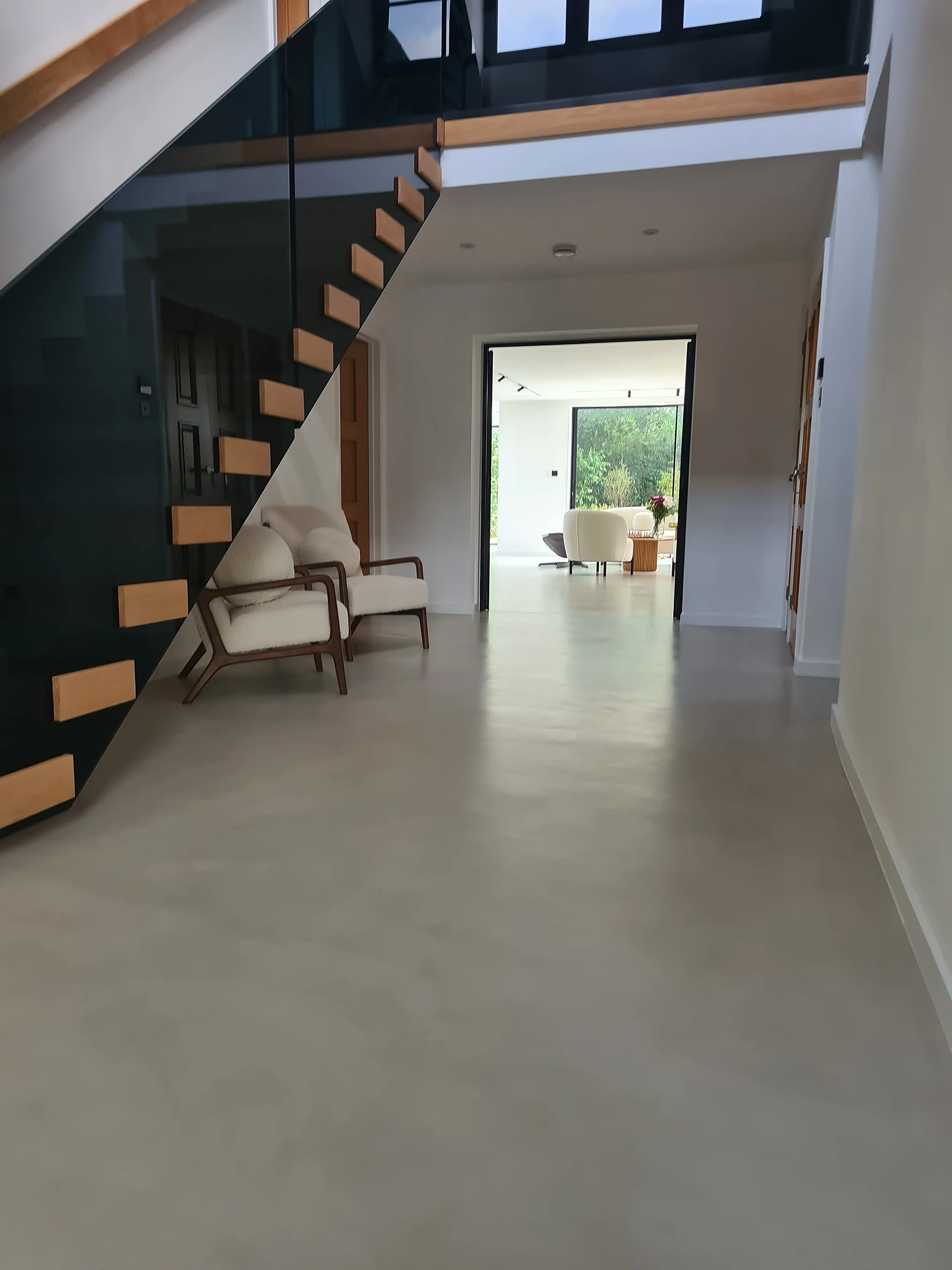
Hallway flooring
A seamless microcement floor running through the hallway and adjoining spaces.
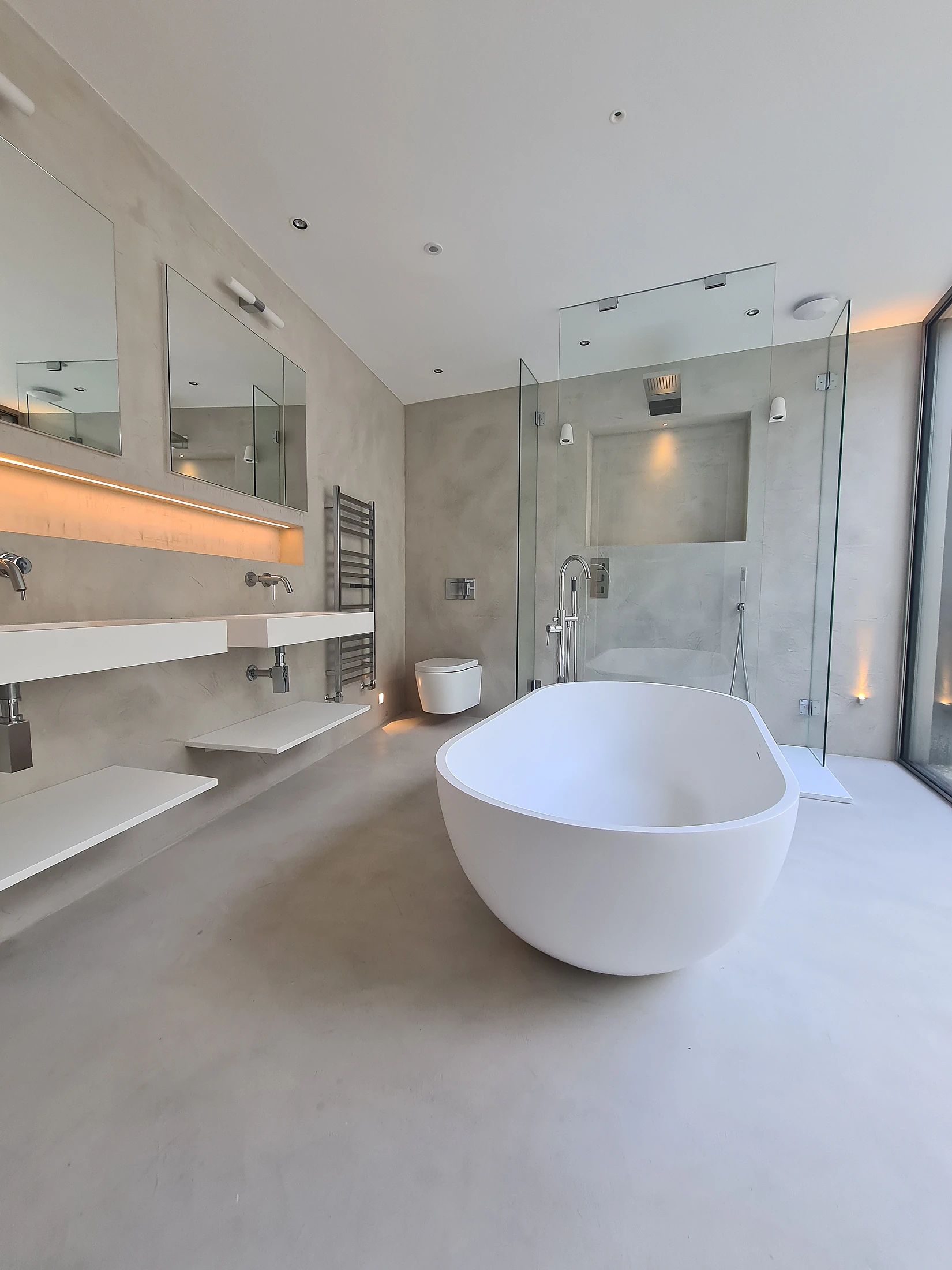
Bathroom microcement
A calm bathroom scheme using a continuous microcement finish.
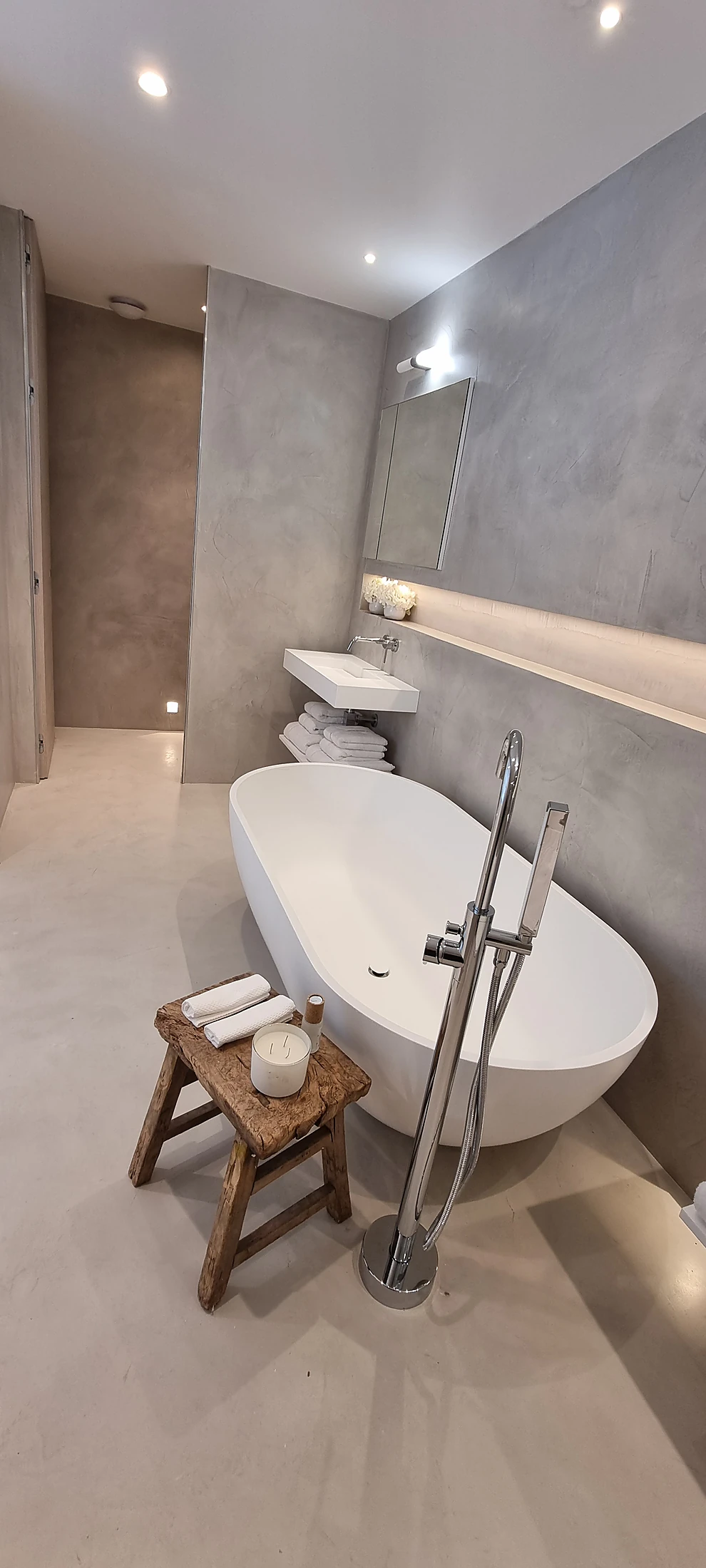
Bathroom walls & floor
Microcement used across a contemporary bathroom setting.
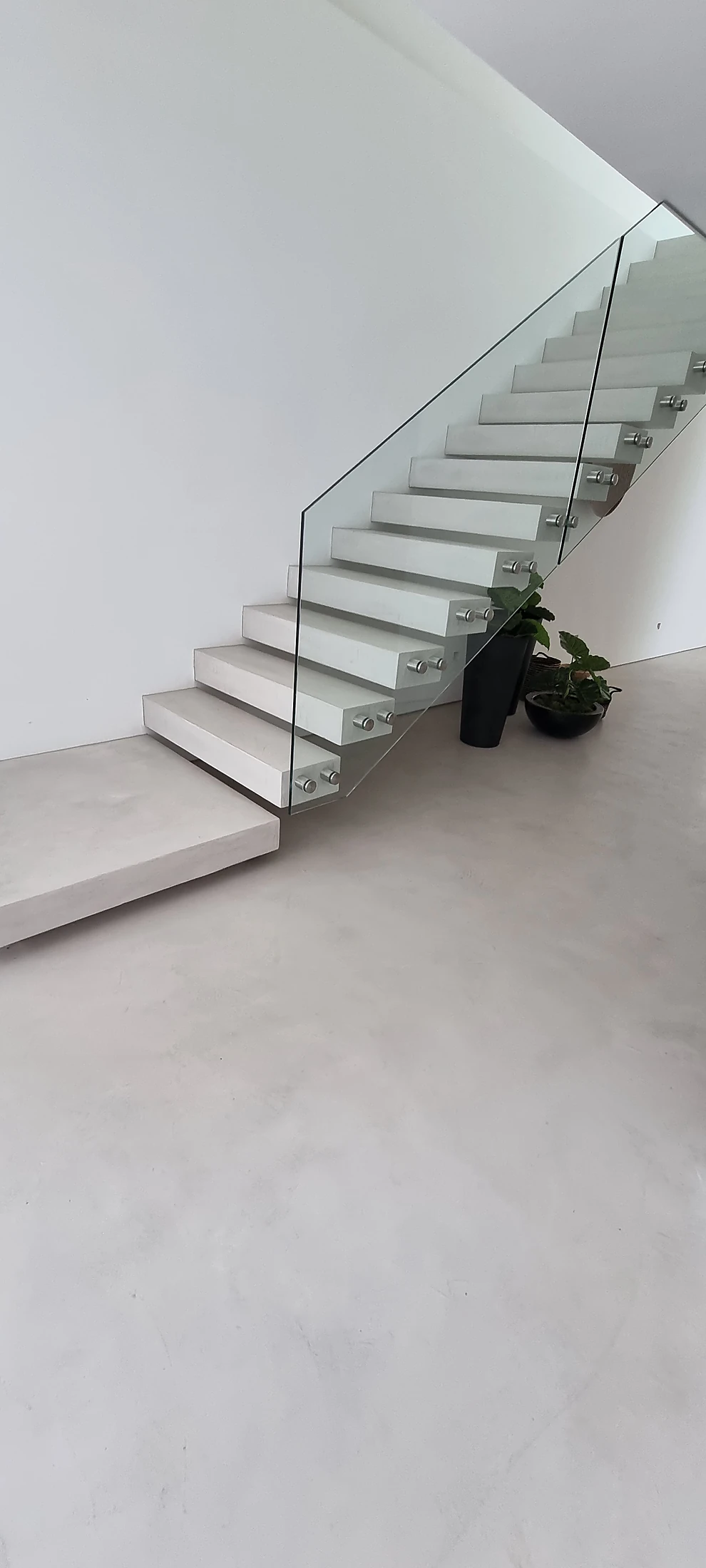
Staircase & landing
A seamless microcement surface carried through a staircase and landing.
Discuss your project
with the family team.
Send the location, approximate area, current substrate and intended finish. Eco Microcement can then advise on suitability, preparation and the next step.
Contact Us →